Africa First Must Mean a Real Single Market
An economic analysis of why Institutional frictions continue to block africa’s single market
What Happened
The Question Behind the Intervention
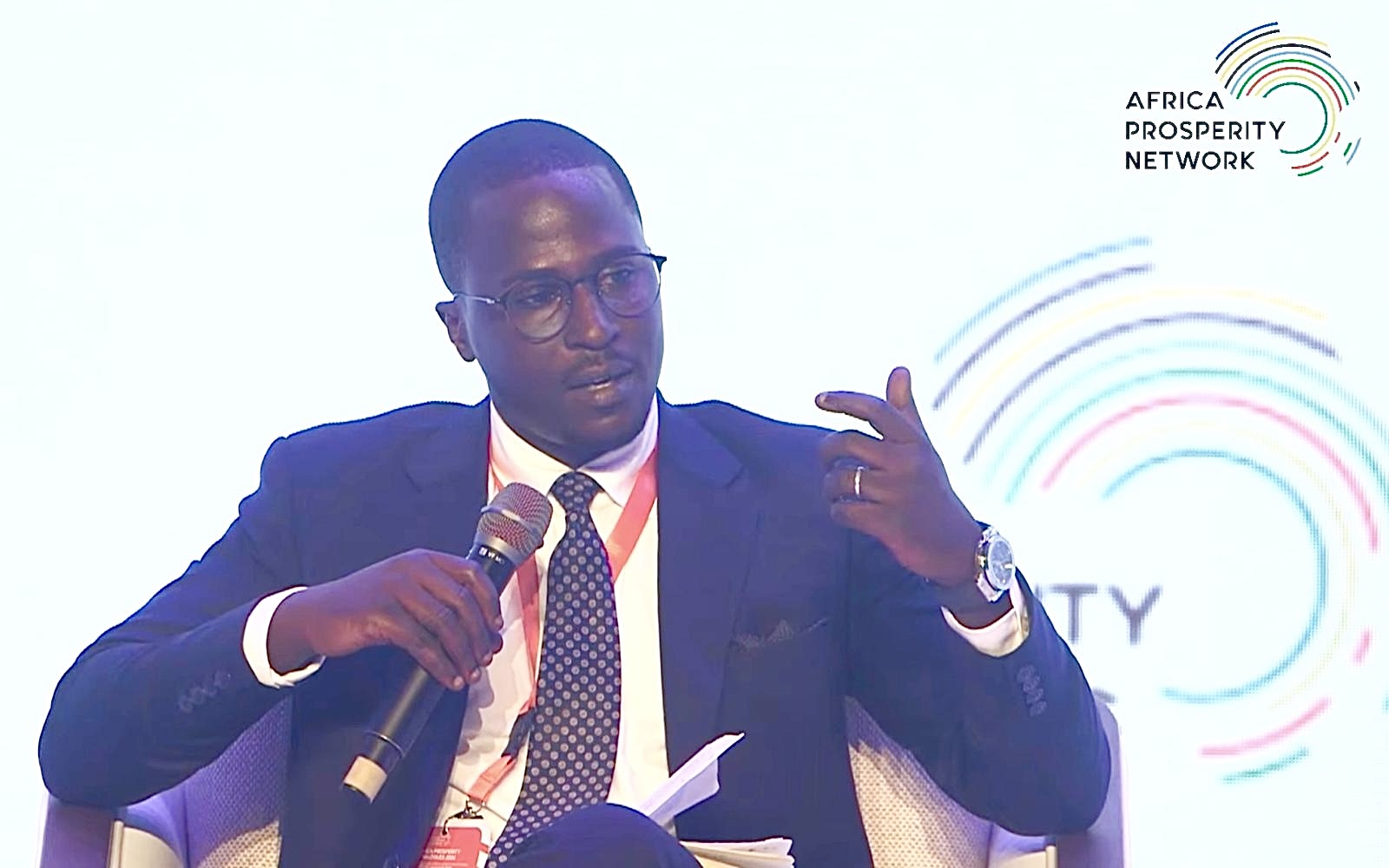
One of the questions I was asked at the Africa Prosperity Dialogues 2026 that took place between the 4th - 6th February 2026 in Accra was straightforward but highly relevant: if governments agree in principle with free movement, why does implementation still stall?
My answer was that Africa’s problem is often not the lack of political declarations. It is the institutional thickness of borders: rules applied inconsistently, incentives misaligned, and systems that keep the cost of moving people, goods and services too high for SMEs. That was the core of my intervention on practical governance and economic integration.
Why does this matter so much now?
Recent shocks have reminded us how exposed African economies remain when food, fuel, fertiliser and industrial inputs depend too heavily on external routes and external decisions. When the war in Ukraine disrupted global markets, UNCTAD noted that 25 African countries were importing more than one third of their wheat from Russia and Ukraine, while 15 were importing more than half. The shock was serious enough that then-African Union Chair Macky Sall travelled to Sochi to discuss the implications for Africa’s food security.
The same lesson is being reinforced again by the current Middle East shock and the disruptions around the Strait of Hormuz. UNCTAD warns that these disruptions are raising energy, transport and food costs, with trade and growth expected to slow in 2026 if the shock persists. Around 20 million barrels per day, equivalent to roughly 25% of global seaborne oil trade, normally pass through that chokepoint.
External Shocks and Macroeconomic Pressures in The Gambia and Senegal
The transmission of negative externalities is immediate across Africa. Fuel prices in The Gambia have increased significantly effective April 1, 2026, with petrol rising 18.8% to D98.00 (US$1.45) per litre and diesel increasing 12.3% to D95.00 (US$1.40) per litre, while the government is subsidizing these costs with over D316 million (US$ 4.7 million), capping prices to cushion the impact on households and businesses.
In an economy structurally exposed to imported fuel costs, including through electricity generation that has long depended on imported diesel and heavy fuel oil; external oil shocks do not remain confined to the energy sector. They pass rapidly into transport, supply-chain costs and the general price level, turning a geopolitical disruption abroad into a domestic inflation and fiscal-management challenge at home.
Senegal, meanwhile, is dealing with a more structural macro-fiscal adjustment. After the hydrocarbon-driven acceleration of 2025, growth is expected to slow sharply in 2026, while the debt overhang remains severe. The World Bank's April 2026 Macro Poverty Outlook estimates central government debt at 122.7% of GDP in 2024, easing only marginally to 118.9% in 2025. At the same time, the Ministry of Economy has indicated that growth could slow from 6.7% in 2025 to around 2.5% in 2026. The point is not simply that growth is moderating after an oil-and-gas boost; it is that Senegal is entering that slower phase with far less fiscal room than the headline growth numbers initially suggest.
That pressure is increasingly visible in debt service. Reuters report that debt-servicing costs rose 44.5% year on year in the fourth quarter of 2024 to CFA 822.3 billion and increased by a further 24.0% year on year in the first quarter of 2025. Looking ahead, Senegal faces more than $4.6 billion in external debt payments over the next year, including nearly $1.8 billion owed to commercial creditors and more than $600 million on eurobonds. At the same time, IMF support remains frozen pending resolution of the fiscal misreporting case, limiting access to concessional financing just as financing needs intensify. This is what makes the debt issue so consequential: it is not only about the size of the stock, but about how debt service increasingly crowds out room for public investment, infrastructure spending and support to the productive sector.
The financing mix has therefore shifted toward the regional market and shorter-maturity instruments. The World Bank notes that portfolio inflows rose as Senegal turned to the regional debt market to replace external commercial borrowing. S&P then warned in March 2026 that gross financing needs could reach about 26% of GDP and cut Senegal's local-currency rating to CCC+/C, citing growing dependence on short-maturity domestic and regional debt, rising refinancing risk, and the fact that spillovers from the Middle East conflict were already pushing up public expenditure and interest costs. That came after S&P had already cut Senegal's sovereign rating to B- with a negative outlook in July 2025. In short, recourse to regional financing has bought time, but it has also shortened maturities, increased rollover risk and reinforced the message from successive downgrades: Senegal's macroeconomic challenge is no longer just about growth, but about restoring credibility, rebuilding fiscal space and regaining access to more stable financing.
Even where the causes are not identical, the message is the same: many African economies have limited room to absorb fresh external shocks.
Africa First as Strategic Regionalism
That is why Africa First should not be misunderstood as retreat or isolation. It should be understood as strategic regionalism: owning our market, reducing the cost of crossing borders, and building regional value chains that make African economies less vulnerable to external volatility.
The opportunity is real. Afreximbank reports that intra-African trade represented 14.9% of total African trade in 2023, up from 13.6% in 2022. UNCTAD also notes that 61% of Africa’s regional exports are processed and semi-processed goods. In other words, regional trade is not only about volume; it is where diversification starts to become visible. UNCTAD further estimates that AfCFTA implementation could increase intra-African freight by 28% and maritime freight demand by 62%. The same logic applies in sectors like energy and agriculture. Africa holds about 60% of the world’s solar potential, yet attracts less than 3% of global energy financing, while around 600 million people still lack access to electricity. At the same time, agriculture accounted for 46% of employment in Africa in 2023. This is why the case for integration is not abstract. It is about powering firms, moving food more efficiently, supporting African production for African markets, and creating the conditions for SMEs to scale across borders.
So, the real choice is not between sovereignty and integration. It is between fragmented sovereignty that leaves us exposed and strategic coordination that makes us stronger.
A Test of a United Continental Voice in Global Governance
A similar strategic question is visible beyond trade, in the politics of global governance. At first glance, the African Union did not reject Macky Sall’s candidacy for UN Secretary-General. The reality is more nuanced and more revealing of the continent’s internal dynamics. As part of the silent procedure, 37 African states expressed their support, meaning that the candidacy had already secured a significant majority within the African Union’s 55 member states.
However, the procedure was interrupted because 13 countries expressed opposition, including Senegal, which on 27th March indicated that it did not consider itself concerned by the candidacy. Other states justified their position on the basis of the rotation principle, arguing that it was not yet Africa’s turn to lead the United Nations. In addition, five countries requested more time to complete their consideration, judging the 24 hours initially granted too short. These elements point less to outright rejection than to an unfinished continental consensus.
Beyond the figures, this sequence reveals a deeper reality about the functioning of global governance. In the case of António Guterres in 2016, despite divisions within Europe, he was appointed Secretary-General because the final decision does not rest with continents alone. It depends on the Security Council and, above all, on the geopolitical calculations of the permanent powers. In practice, global balances often take precedence over rotation or even regional consensus.
In that context, Macky Sall’s candidacy, which has been under consideration since it was submitted on 3 March, matters not only because it appears to enjoy substantial African backing, but also because it raises a broader strategic question for the continent: can Africa speak with a single voice on major global issues, or does it risk once again diluting its influence at a decisive moment? Opportunities of this kind are rare. The deeper issue is whether a continent whose future is so often discussed in global forums can afford to remain divided while the most consequential decisions continue to be shaped in institutions where Africa is still underrepresented.
Analyst Commentary
A focus on Delivery
If we are serious about resilience, then MAKE AFRICA BORDERLESS NOW campaign cannot remain a slogan. It must become an implementation agenda: lighter borders for business, more predictable customs systems, interoperable payments, stronger regional logistics, and a political commitment to treat African demand, African production and African capital as strategic assets.
That is how Africa moves from vulnerability to bargaining power.
And that is the conversation I was glad to contribute to at the APD 2026.
MUHAMMAD SILLAH
Economist | Trade Investment and Development Policy Advisor
Discussion (0)